
Kaufman & Stigger, PLLC can help you if you’ve been injured in a car accident on one of the interstate highways near Louisville. This sounds obvious, but the more cars there are in a given area and the faster they’re going, the more likely an accident will be. And by that logic, it’s not surprising that some of the most serious car accidents in Louisville happen on an interstate highway. Our team will be there to help you through it. Set up a free consultation today.
When It Makes Sense to Talk to a Lawyer
You obviously never want to be in a car accident in Louisville, regardless of where you’re driving. That said, with so many drivers traveling through the area every day, accidents are bound to happen.
And even though pretty much everybody understands the risks of driving on the interstate, it’s very different when you’re the one that’s injured in an accident. At that point, you’re facing a lot of questions and problems. And that’s also when it makes sense to reach out to our team for help, where we can:
- Look into what caused the accident and who all might be responsible.
- Help you understand your options and what the path ahead looks like.
- Get important information and evidence for your claim.
- Handle the back-and-forth with the insurance company.
With any car accident, you have enough to worry about just dealing with your injuries. You shouldn’t also try to take on the claims process too. We can at least take that side of the process off your shoulders.
Where Interstate Car Accidents Usually Happen in Louisville
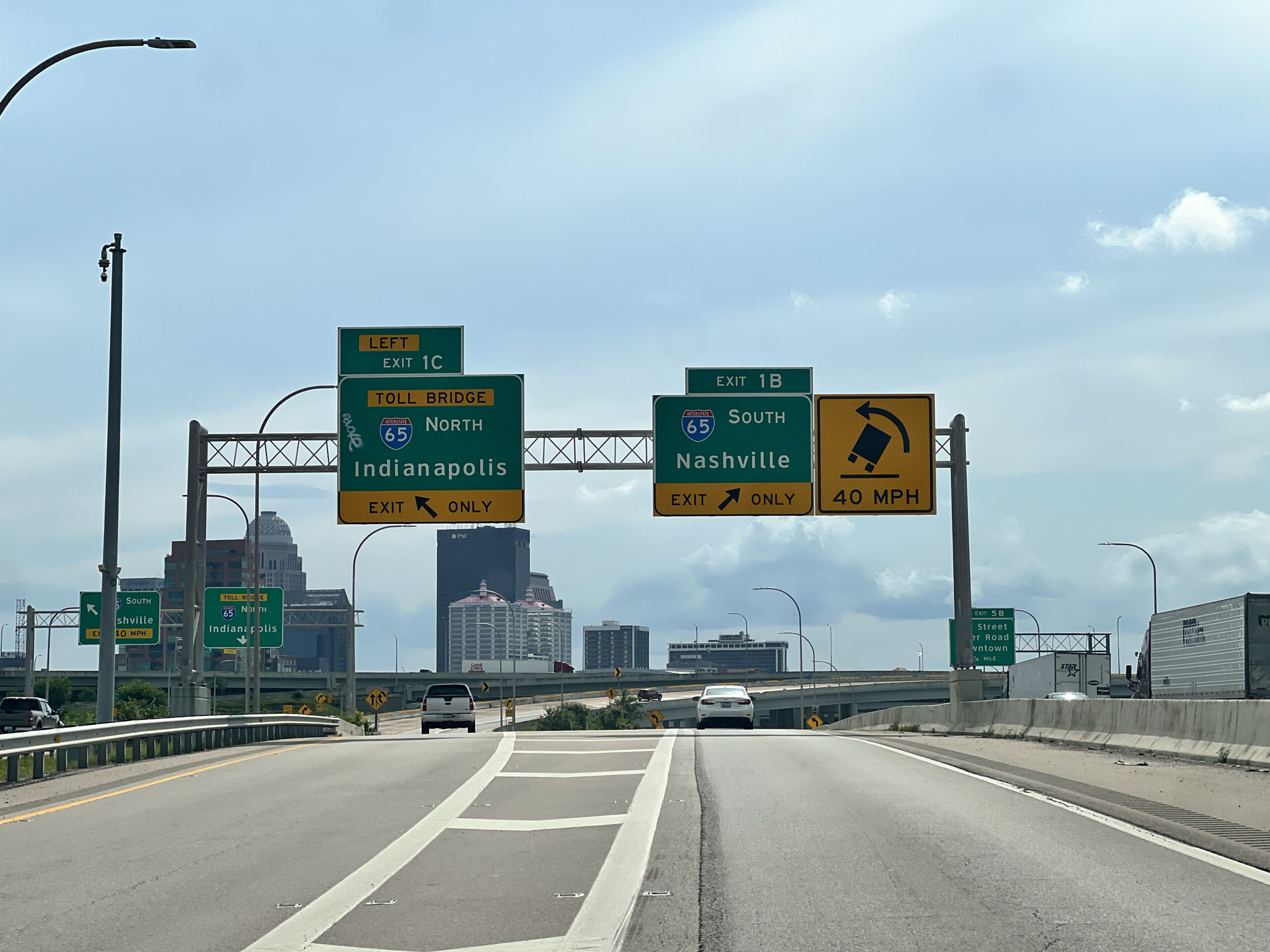
You can be a careful driver and still end up in a car accident on the interstate Louisville, which is unfortunate. That’s because you can’t control what the person in the car next to you is doing, and more to the point, Louisville’s location makes it a key transportation hub with five major interstate junctions:
- I-64
- I-65
- I-71
- I-264 (Waterson Expressway)
- I-265 (Gene Snyder Freeway)
But that’s only one part of the equation. The other is why they happen. Usually, you’re looking at:
- Rear-end collisions when traffic slows down or comes to a sudden stop.
- High-speed crashes involving drivers traveling too fast for traffic or road conditions.
- Sideswipes and merging accidents when drivers change lanes without checking their surroundings.
- Multi-vehicle pileups during heavy traffic or poor weather.
- Truck accidents involving commercial vehicles traveling through Louisville.
- Collisions near interstate entrances, exits, and connecting ramps.
While these are some of the common types of interstate accidents you’ll find around Louisville, it’s important to understand that every single accident is different. Yes, there are patterns, but the claims process is about what happened to you in particular. That’s why what happens after the accident matters.
Information That Can Help Untangle an Interstate Car Accident
Whether you’ve been in an interstate accident before or this is your first one, the time immediately after the crash can be important when it comes to gathering information. Of course, your health and safety come first. The very first thing you need to do is:
- Call 911 to report the accident and get police and medical help to the scene.
Everything else can wait, but once things settle down a bit at the scene, try to get just a few basic things like:
- Pictures and videos of the vehicles, damage, road conditions, skid marks, traffic signs, and any visible injuries.
- Names and contact information for anyone who saw what happened.
- Insurance information, driver’s license information, and contact details from the other driver or drivers.
That’s really all you need to worry about at the scene. You don’t need to become an investigator while you’re standing on the shoulder of an interstate. Focus on getting medical care and answering any questions from the police.
Then, in the next few days and weeks, more information will start coming in. Try to keep track of your:
- Medical records from the ER, urgent care, follow-up visits, and physical therapy.
- The police accident report and repair estimates for your vehicle.
- Photos showing how your injuries are changing as you recover.
- Notes about doctor appointments, time missed from work, pain, and things you can’t do because of your injuries.
- Letters, emails, claim numbers, and other information from the insurance company.
- Dashcam footage or interstate traffic camera footage, if available.
You’re not trying to solve the accident with all of this information. You’re just putting together the pieces. A few pictures, some contact information, and notes about what happens after the accident can go a long way toward getting the claims process started.
Who’s Responsible for My Injuries in an Interstate Car Accident?
The biggest thing about an interstate car accident is obviously your health. But there are several other important factors that come with it, and none are more impactful than legal responsibility. This is what’s going to shape how the entire claims process plays out, so understanding how it works ahead of time can give you a head start if you actually do need to file a claim.
In legal terms, it’s called liability. And it usually comes down to negligence, where they either:
- Did something they shouldn’t have done, or;
- Didn’t do something they should have done that led to the accident and your injuries.
Sometimes that’s easy to figure out, like if the other driver:
- Was distracted by their phone while traveling along I-64 or I-65.
- Made an unsafe lane change while merging onto I-264 or I-265.
- Was speeding or driving too fast for traffic or weather conditions.
- Followed too closely and couldn’t stop when traffic slowed down.
- Was driving while impaired by alcohol or drugs.
- Failed to leave enough room when traveling alongside another vehicle.
But it can also get really complicated with certain interstate accidents. It’s not always just the other driver. Others can be involved too, like:
- The person who owns the vehicle but wasn’t driving it.
- A trucking or delivery company if one of its drivers caused the accident.
- A company that made the vehicle or one of its parts.
- A government agency or contractor responsible for interstate maintenance or dangerous road conditions.
The reason it’s so important to nail down responsibility as much as you can is pretty simple: it helps you figure out the person or group that may have to pay for your injuries and other losses. But when you get to that point, it usually means dealing with an insurance company and actually filing a claim.
How the Claims Process Usually Works After an Interstate Car Accident
Officially, the fact that your car accident happened on one of Louisville’s interstates doesn’t necessarily change the way the claims process works. But what it does in reality is change what you’re dealing with. Namely, because speeds are higher and there’s typically more vehicles involved, it makes your injuries, damage to your car, and the sheer magnitude of the accident more serious.
So when you go to file a claim, you’re trying to address those problems by getting financial help for them. Usually, you do this by:
- Filing an insurance claim outside of court
- Filing a personal injury lawsuit
Things typically start with a direct insurance claim, but insurance companies often focus on medical bills and repair estimates, but that doesn’t necessarily tell the whole story. They may overlook how your injuries affect your daily life, how much pain you’re dealing with, or what treatment you still need. That’s why settling too quickly can be a mistake. Once you accept a settlement, you generally can’t go back and ask for more if your condition gets worse.
If the insurance company won’t make a fair offer, a personal injury lawsuit may be the next step. Depending on your situation, you may be able to recover fuller damages relating to your:
- Current and future medical expenses
- Lost income
- Vehicle repair or replacement costs
- Pain and suffering
- Emotional distress and reduced quality of life
- Wrongful death-related losses in fatal accidents
Kentucky generally gives you two years to file a claim after a car accident, but even still, it’s worth understanding your options early. Interstate accidents are usually much more complicated because they involve multiple vehicles, commercial drivers, or several insurance companies. One way or the other, though, our team will be ready from the very beginning.
Get In Touch With Kaufman & Stigger After a Louisville Car Accident on the Interstate
A car accident on one of Louisville’s busy interstates can turn your life upside down. Whether you were traveling along I-64, I-65, I-71, I-264, or I-265, you shouldn’t have to figure out the claims process on your own.
At Kaufman & Stigger, PLLC, our team can help you understand your options, look into what happened, and handle the difficult parts of your injury claim while you focus on getting better. Get in touch today to set up a free consultation.